
“This Camp is Full of Hujjaj!”: Claims over Land and Housing in a Contested Palestinian Camp in Amman (Forthcoming, 2022)
Abstract
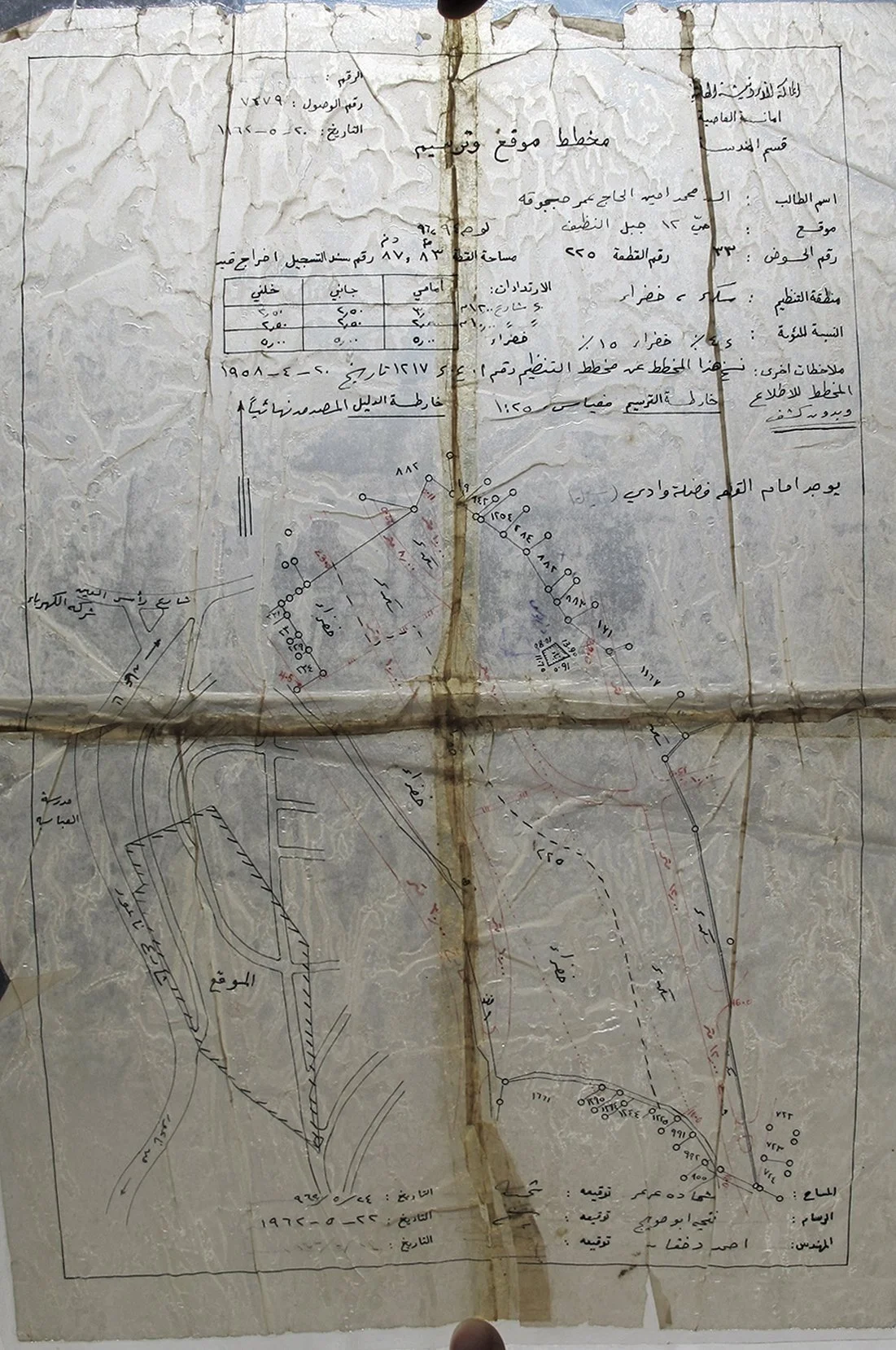
Historically, Islamic sharia courts across the Ottoman empire used a document called hujja for registering property. In present-day Jordan, the hujja has been declared illegal. Yet, in Palestinian refugee camps, hand-written hujjas continue to be used for inheritance, buying and selling houses, establishing building guidelines, and demonstrating occupancy. Particularly true in camps unrecognized by UNRWA and deemed “squatter settlement” by the government. This article contributes to the emerging study of property rights in Palestinian camps by putting legal complexity and territorial claims at center stage. Using the case of a Palestinian camp built on a plot of land that remains the private property of the descendants of Ottoman Circassian refugees, this article illustrates how, on the one hand, singular property gets entangled with spatially grounded claims to housing and the overriding power of the state after the limited war of Black September. On the other hand, how Palestinians use hujjas to facilitate inhabitation. Rather than assuming legally contested camps to be part of the “illegal” growth of Middle Eastern cities, this article historicizes the material processes of land tenure and the mobilization of plural legal orders to claim space. Such a case and the legal pluralism studied put the “squatter settlement” back into Palestine studies, refugee studies, and Ottoman regimes of property.